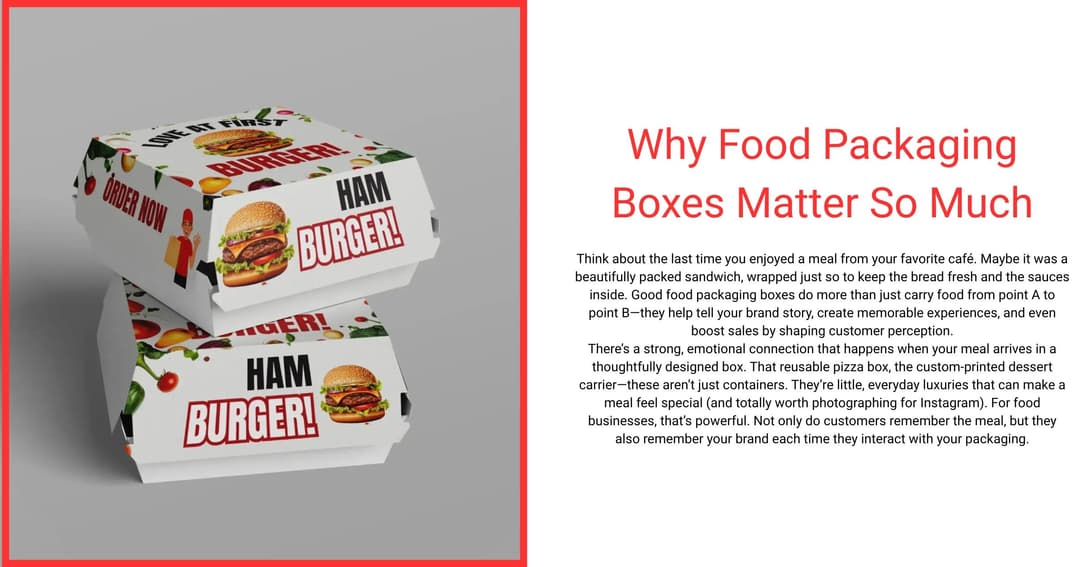
Food Packaging Boxes: An Essential Tool in Marketing Strategy
Published: December 28, 2025
Ever peeled open a beautiful pastry box, only to find that the packaging felt just as special as the treat inside? If you’re running a direct-to-consumer (D2C) food business, you know that experience matters. The way you package your products shapes customer emotions, loyalty, and even repeat sales. Today, let’s dive into the world of food packaging boxes—why they're more than a container, and how they can boost your marketing strategy in ways you might not expect.
Why Food Packaging Boxes Matter in D2C Marketing
As a business owner, you carefully craft your recipes, pick out quality ingredients, and work hard on branding. But what happens once your delicious creations leave your kitchen? The answer: their journey continues inside food packaging boxes.
Imagine a customer opening a box of cookies on their birthday. They formed an impression long before tasting the first bite. Eye-catching, sturdy packaging signals care and professionalism; plain or flimsy packaging might say the opposite. Emotions are ignited by the look, feel, and even sound of the box when they unbox the product. In D2C, where you likely won’t have a physical store to wow people, your packaging becomes the handshake, the welcome mat, and often, the first thing your customer really interacts with.
Brand Storytelling Through Food Packaging Boxes
Food packaging isn’t just a shield against bumps and mishaps. It’s a silent brand ambassador, telling your story when you’re not there. Think about it: legendary food brands like Ben & Jerry’s or Milk Bar are instantly recognizable because their packaging reflects their playful, bold voices. If your brand leans toward “local and sustainable,” the box could show recycled textures, earthy tones, and messaging about environmental choices.
Here’s how D2C food packaging boxes connect your customer to your brand:
- Consistent Colors & Logos: The shades and fonts you use are part of a lasting memory. Repetition breeds recognition.
- Personal Touches: A thank-you card or a hand-written name can turn a routine purchase into a memorable unboxing experience.
A beautifully designed box acts like free advertising—customers share Instagram moments, and suddenly your packaging is doing even more heavy lifting.
Boosting Sales by Enhancing Perceived Value
Let’s be honest, we all judge things by their cover sometimes. A high-quality, well-designed food packaging box can make your product feel more premium, even before tasting it. This “perceived value” is powerful in online shopping, where touch and smell don’t factor in pre-purchase. Studies show that attractive packaging can increase willingness to pay and sway buyer decisions.
How does packaging influence purchase and brand loyalty?
- It assures customers of your professionalism and care.
- It makes the unboxing an event, not just a delivery.
For D2C food brands, every sale is an opportunity to turn a new shopper into a lifelong fan. Well-thought-out packaging goes a long way toward achieving that.
Standing Out in an Overcrowded Market
The D2C landscape is packed with creative brands, from plant-based snacks to gourmet bakery goods shipped straight to your door. But this also means competition is fierce; you need to grab attention quickly. Custom food packaging boxes are a simple but effective way to stand out—whether that’s through unique shapes, creative closures, or playful graphics. Even minimalist packaging, when done thoughtfully, can cut through the noise if it aligns with your brand personality.
Think of the last time you bought chocolate or tea simply because the box looked interesting. Great packaging gives you an edge not just online, but also through word-of-mouth—and let’s not forget the power of being “Instagrammable.”
Practical Tips: Designing Food Packaging Boxes That Work
Ready to elevate your D2C game with standout food packaging boxes? Focus on these essentials:
- Simplicity Wins: Don’t overload the box with too much information or graphics. Ensure branding elements are clear and your product name pops.
- Function First: Make sure your packaging protects the food (think leak-proof, crush-resistant), and is easy for your customers to open and recycle.
- Honest Communication: Ingredients, nutritional info, and your brand’s story should be visible (and readable). Transparency builds trust.
Always test your packaging—a box that looks beautiful on-screen should still feel functional and attractive in real life.
How to Choose Food Packaging Boxes: What to Look For
Before you invest, use this quick D2C packaging checklist:
- Material Quality: Strong cardboard, sturdy paperboard, and food-safe inks protect both food and reputation.
- Sustainability: More shoppers care about eco-friendly options. Use recyclable or compostable packaging when possible, and highlight that choice.
- Customization: Pick suppliers that let you tweak shapes, sizes, or finishes so your box feels truly “yours.” This is a great way to reinforce your brand’s unique story.
Do your homework: ask for samples before placing a large order, and review how boxes travel from your facility to your customer’s doorstep. Feedback from buyers can be a goldmine for continuous improvement.
Wrapping Up: Food Packaging Boxes as Your Secret Marketing Tool
Beautiful, practical, and on-brand food packaging boxes can turn casual shoppers into brand champions. They tell your story, protect the quality of what you make, and make the whole customer experience memorable. In the crowded world of D2C food, where every detail counts, your choice of packaging is more than just a box—it’s a direct investment in your brand’s future.
If you’re ready to refresh your packaging or take a closer look at your options, start small—gather inspiration, collect feedback from your current audience, and explore suppliers who share your values. Smart packaging helps your food shine before the first bite. Why not make every unboxing unforgettable?
Get in Touch
Still have questions? Fill out the form below and our team will get back to you shortly.