How Much Does Custom Packaging Cost in India?
Inkprint Team
Published: September 7, 2026
Custom packaging cost in India is not a fixed number it typically ranges from Low to High depending on packaging type, material, dimensions, order quantity, printing method, number of colours, and finishing. A simple one-colour kraft mailer box will always cost less than a multi-colour rigid box with foil stamping and inserts, because each specification adds material, tooling, or production time. The only accurate way to know your cost is to share complete specifications with a supplier for quotation.
Key Takeaways
Packaging cost per box is driven by six core factors - packaging type, material, dimensions, quantity, printing, and finishing not any single variable.
Unit cost generally falls as order quantity rises, because fixed costs like dies and plates get spread across more boxes but this isn't guaranteed at every volume tier.
Premium structures (rigid boxes, multi-colour offset print, foil/emboss) sit in a different cost bracket than standard corrugated or kraft packaging, regardless of quantity.
Setup charges (dies, plates, sampling) are usually one-time costs, separate from the recurring per-box price — always ask suppliers to itemise these.
A quote is only as accurate as the specifications behind it — dimensions, material, print details, and finishing must all be confirmed before comparing supplier pricing.
Why There's No Single Answer to "What Is the Packaging Cost Per Box?"
Businesses often search for one number, but no single rate applies to every custom packaging requirement. Two boxes that look nearly identical on screen can cost very differently once you factor in board grade, dimensions, printing method, structural design, order quantity, finishing, inserts, and production complexity.
This guide breaks down exactly what drives custom packaging price in India, how MOQ and setup costs affect your final number, and how to structure a quote request so you get comparable, accurate pricing from suppliers.
What Determines Custom Packaging Cost in India?
Custom packaging cost is determined primarily by the combination of material, structure, and production process used to manufacture the box. Paperboard, kraft paper, and corrugated board each carry different raw material costs, and the choice between them depends on product weight, protection needs, and brand positioning.
On top of material, cost is shaped by printing (flexographic, offset, or digital), lamination, die cutting for structural shapes, and order quantity (MOQ). A higher MOQ typically improves per-unit economics because tooling and setup costs are spread across more units, but material and print complexity can offset those savings.
What Factors Affect Custom Packaging Price in India?
1. Packaging Type
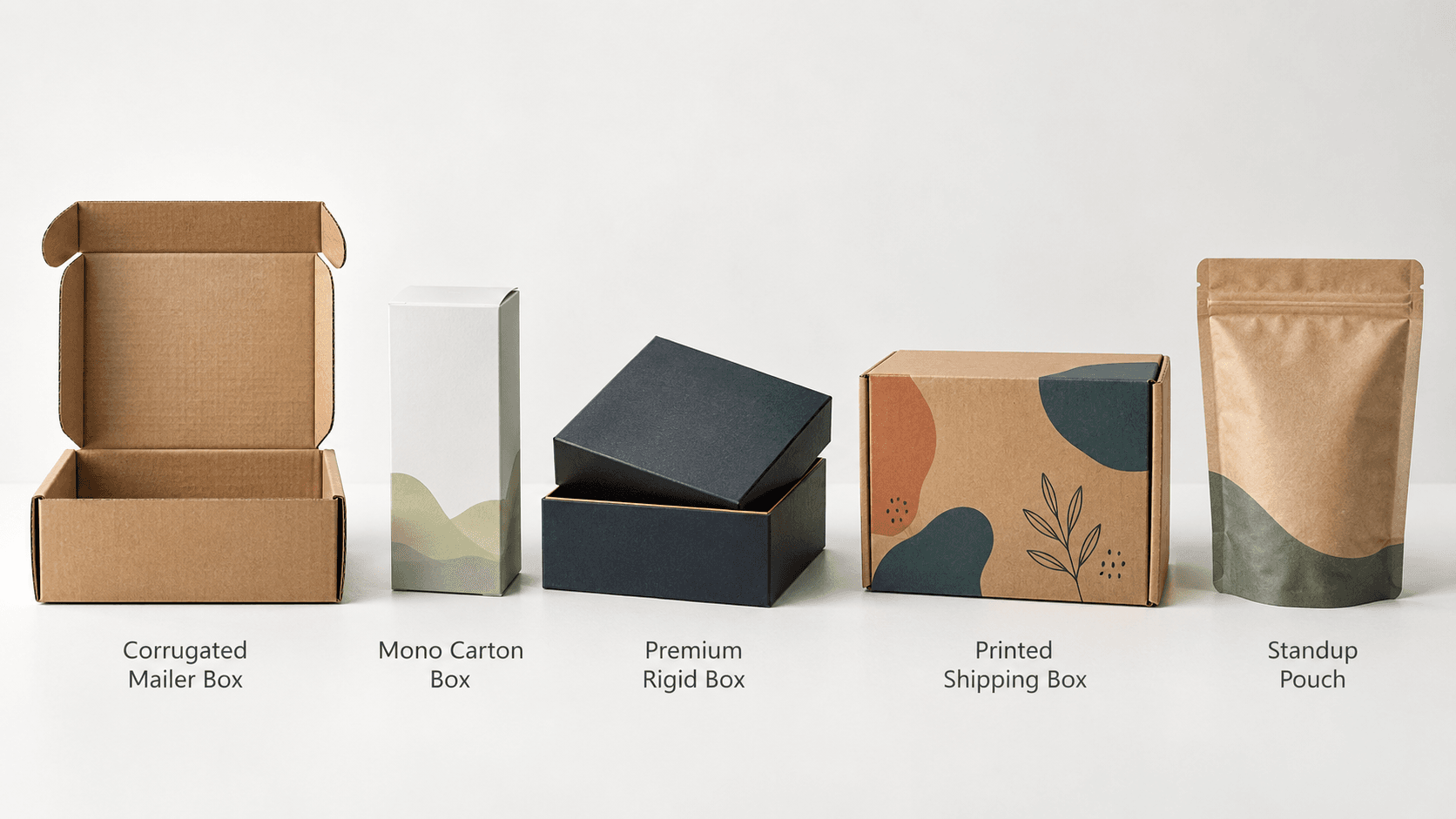
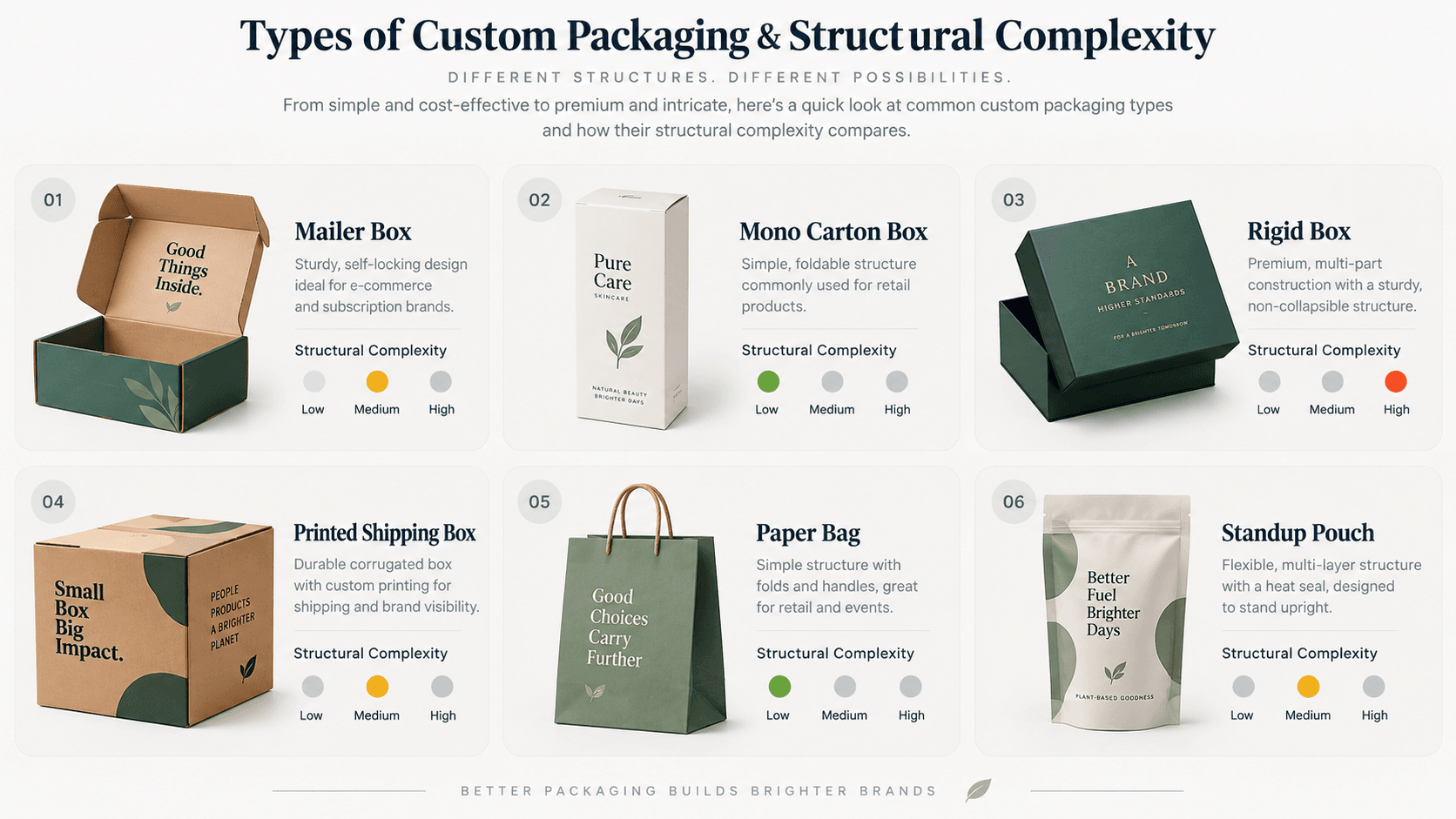
Structural complexity is one of the biggest cost drivers. A basic mono carton box requires simpler tooling than a rigid box, which needs wrapping, board lamination, and precision assembly.
custom mailer boxes — moderate complexity, good for e-commerce shipping and branding together
mono carton packaging — simpler fold-and-glue structure, common for cosmetics and FMCG
premium rigid boxes — highest structural complexity, used for premium and gifting products
printed shipping boxes — functional corrugated structure with branding on the outer surface
custom paper bags — lower tooling requirement, priced mainly on material and handle type
printed standup pouches — flexible packaging with different cost logic than rigid substrates
2. Material and Board Quality
Material specification changes cost because different substrates carry different raw material rates, strength characteristics, and finishing compatibility. Kraft paper is generally the most economical base material, while duplex board, corrugated board, and premium paperboard sit at progressively different cost levels depending on GSM (grammage), BF (burst factor), thickness, and coatings.
Speciality papers textured, coloured, or recycled variants usually cost more than standard boards. The right material depends on product weight, shelf presentation, and durability requirements, not just price.
3. Packaging Dimensions
Dimensions affect cost through material usage, sheet optimisation, and wastage during die cutting. A box size that doesn't align efficiently with standard sheet sizes can increase wastage and push up your effective packaging cost per box.
Dimensions also affect shipping volume and structural efficiency oversized boxes cost more to ship and use more board than necessary. Poorly optimised dimensions can increase packaging cost even when the design itself looks simple.
4. Order Quantity
Order quantity is one of the strongest levers in your final price. Fixed costs machine setup, dies, and printing plates remain roughly the same whether you order 500 units or 50,000 units, so spreading them across a larger run improves per-unit economics.
The packaging cost per box generally decreases as order volume increases, because fixed production costs are spread across more units. This isn't universal, though at very high volumes, other constraints (like machine capacity or material availability) can change the pricing curve, so it's worth confirming tiered pricing directly with your supplier.
5. Printing Method and Number of Colours
Custom box printing price depends heavily on the method used and how many colours the design requires. Flexographic printing is typically used for corrugated and simpler jobs, offset printing suits high-quality multi-colour work at scale, and digital printing works well for short runs or variable designs.
One-colour printing is the most economical option; multi-colour or full-colour artwork with heavy coverage increases both ink cost and press time. Full-bleed designs and complex colour separations add further production steps compared to a single spot-colour logo print.
6. Finishing and Premium Add-ons
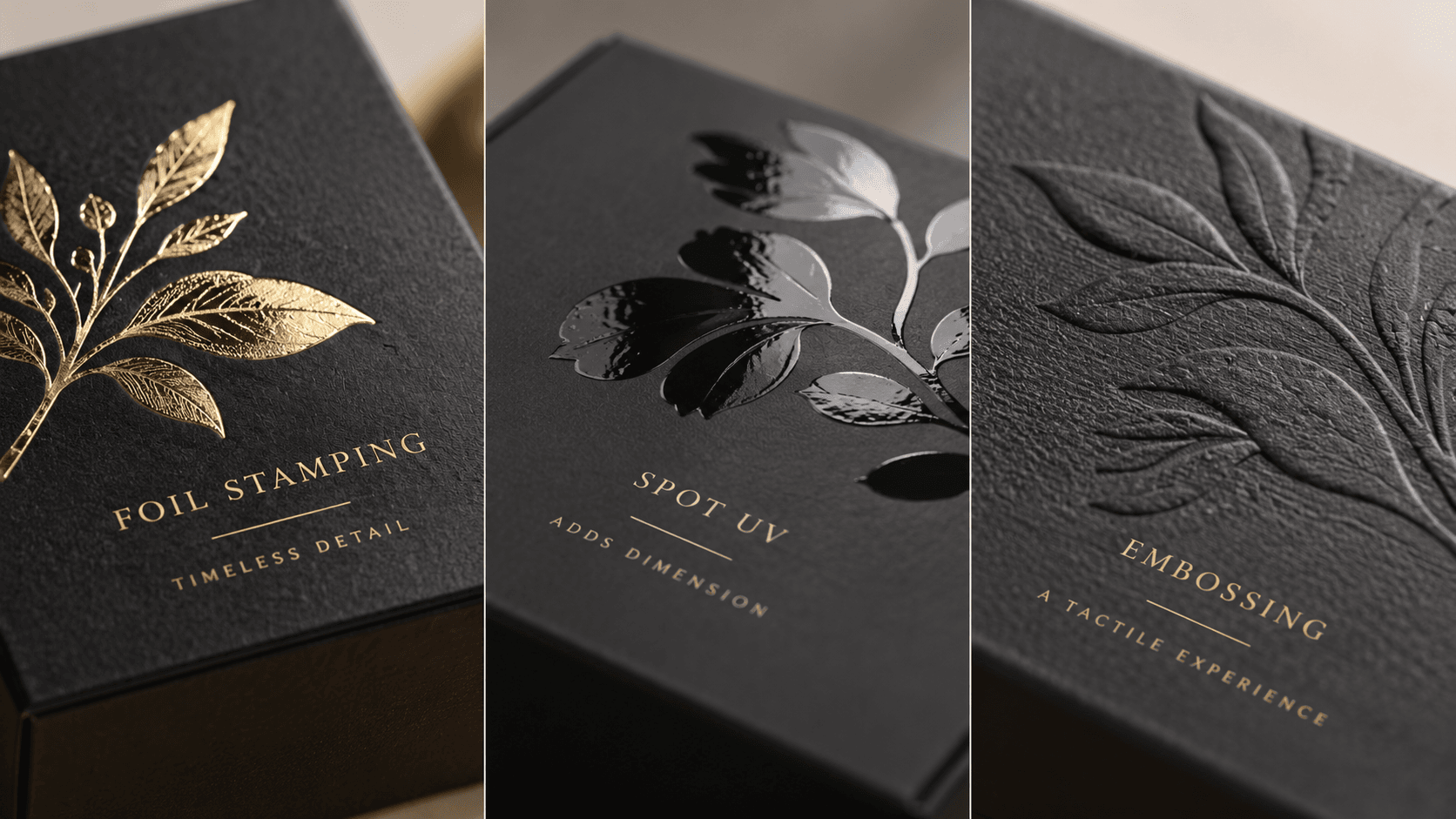
Finishing is where premium packaging cost separates from standard packaging cost. Matte lamination and gloss lamination add a base level of cost for surface protection and shine; spot UV, foil stamping, embossing, and debossing each require additional tooling and a separate production pass.
Window patching, textured paper stocks, and printed inserts add further material and labour. Each additional finishing step should be evaluated for the value it adds to unboxing experience and brand perception, not added by default.
Which Type of Custom Packaging Costs More?
Packaging Type | Relative Cost Level | Main Cost Drivers | Best For |
Mono Carton Boxes | Low–Medium | Board grade, print colours | Cosmetics, FMCG, retail |
Printed Shipping Boxes | Medium | Corrugated grade, print coverage | E-commerce, bulk shipping |
Mailer Boxes | Medium | Structural design, print, lamination | D2C brands, gifting-lite |
Paper Bags | Low–Medium | Material, handle type, print | Retail, gifting, food takeaway |
Standup Pouches | Medium–High | Material layers, barrier properties | Food, cosmetics, FMCG |
Rigid Boxes | High | Board lamination, wrapping, finishing | Premium, jewellery, gifting |
Actual pricing depends on specifications, order quantity and production requirements. Verified ₹/unit ranges should only be added using current Inkprint production data.
How Does MOQ Affect Packaging Cost Per Box?
Packaging MOQ India (minimum order quantity) directly influences your per-box economics because it determines how fixed setup costs are distributed across your order. Lower quantities mean higher per-unit cost since dies, plates, and machine setup are spread across fewer boxes.
Low quantity orders carry higher per-box cost but lower upfront investment and inventory risk — useful for testing a product or SKU.
Medium quantity orders typically offer a better balance between unit cost and inventory holding, suited to growing D2C and e-commerce brands.
High quantity orders usually deliver the best per-unit economics but require storage space and carry higher inventory risk if demand shifts.
MOQ requirements also vary by packaging type — a rigid box MOQ will generally differ from a paper bag or corrugated shipping box MOQ, since tooling and material minimums are different for each structure.
What Setup Charges Can Be Included in Custom Packaging?
Setup charges are one-time costs tied to preparing a design or die for production, separate from your recurring per-box price. These can include structural design, sampling and prototype creation, die or tooling charges, printing plates, artwork adjustment, colour matching, and finishing setup (such as foil dies or embossing plates).
Setup charges should be separated from the recurring packaging cost per box when comparing supplier quotations. A supplier quoting a lower per-box rate but higher setup fees may not actually be cheaper for a small or medium order always ask for a full cost breakdown before comparing.
How Can You Reduce Custom Packaging Cost Without Sacrificing Quality?
Optimise Box Dimensions
Sizing your box close to the actual product dimensions reduces material wastage and can improve sheet utilisation during die cutting. Oversized boxes also increase shipping costs, so dimension optimisation benefits both production and logistics cost.
Choose the Right Material
Match board grade and GSM to actual protection needs rather than defaulting to the heaviest or most premium stock available. A lighter, appropriately-rated material can perform the same protective function at a lower cost for many product categories.
Simplify Printing
Reducing the number of colours or print coverage can lower cost meaningfully, especially at lower volumes. This doesn't mean sacrificing branding — a well-designed one or two-colour layout can look as premium as a full-colour design.
Increase Order Quantity Carefully
Higher volumes generally reduce per-unit cost, but only if the volume matches realistic sales projections. Over-ordering to chase a lower unit price can tie up cash flow and warehouse space — the trade-off should be evaluated against inventory carrying cost.
Standardise Packaging Sizes
Using a smaller number of standard box sizes across SKUs, rather than a unique size for every product, reduces the number of separate dies and setups you need to pay for and manage.
Use Premium Finishes Strategically
Instead of applying foil stamping or spot UV across an entire box, using it selectively on a logo or key design element can deliver much of the premium visual impact at a fraction of the finishing cost.
Custom Packaging vs Standard Packaging: Which Is More Cost-Effective?
Feature | Custom Packaging | Standard Packaging | Best For |
Initial Cost | Medium–High (design, dies) | Low (stock sizes) | Standard: quick, low-budget launches |
Branding | High customisation | Limited/generic | Custom: brand-focused businesses |
Size Optimisation | Tailored to product | Often oversized | Custom: reduces shipping waste |
Customer Experience | Stronger unboxing experience | Basic, functional | Custom: D2C and gifting brands |
Smaller Quantities | Setup cost less justified | Cost-efficient at low volumes | Standard: very small test orders |
Scalability | Improves with volume | Consistent but generic at scale | Custom: growing brands |
The cheapest packaging option is not always the most cost-effective business option. Standard packaging may look cheaper upfront, but custom packaging can influence product protection, shipping efficiency, unboxing experience, and repeat brand recognition all of which affect long-term business value beyond the initial box price.
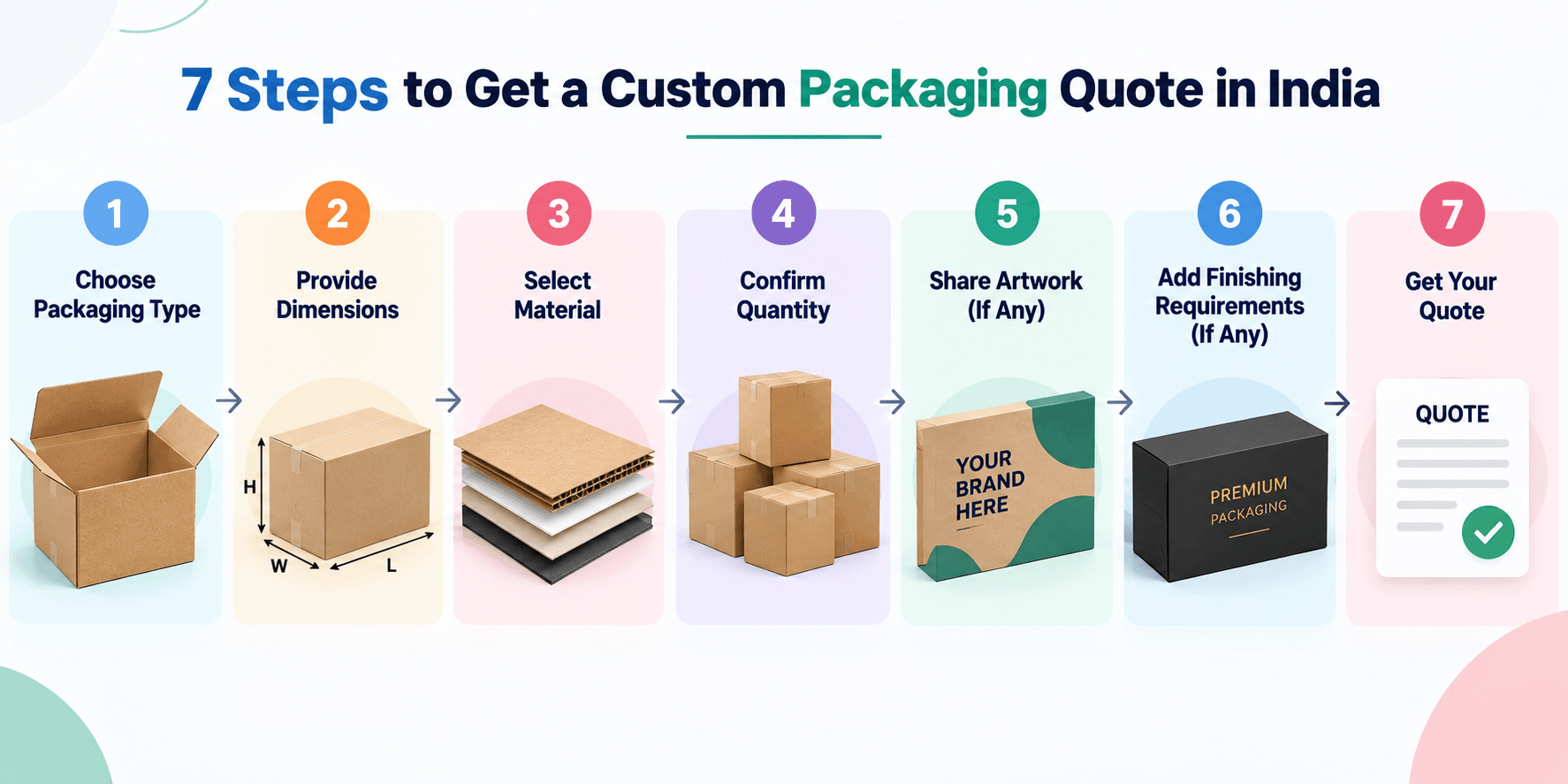
How Do You Get an Accurate Custom Packaging Quote?
Step 1 — Choose the Packaging Type
Decide between mailer box, mono carton, rigid box, shipping box, paper bag, or pouch based on your product's weight, fragility, and brand positioning.
Step 2 — Provide Exact Dimensions
Share Length × Width × Height, and clarify whether these are internal dimensions (fits the product) or external dimensions (final box size) this materially changes material calculations.
Step 3 — Specify the Material
State your preferred board type, GSM, or finish requirement, or ask the supplier to recommend one based on product weight and protection needs.
Step 4 — Confirm Order Quantity
Share your target MOQ and, if possible, expected reorder frequency this helps suppliers quote tiered pricing accurately.
Step 5 — Share Artwork and Printing Requirements
Confirm number of colours, whether printing is inside, outside, or both, Pantone colour requirements, approximate print coverage, and artwork file format.
Step 6 — List Finishing Requirements
Specify lamination type, spot UV, foil stamping, embossing, debossing, window patching, or any inserts needed.
Step 7 — Request Sampling and Final Quote
Before finalising, confirm unit cost, MOQ, setup cost, sampling cost, applicable taxes, freight, and production lead time all in one written quotation.
Custom Packaging Quote Checklist
Use this checklist before requesting a quote from any supplier:
☐ Packaging type
☐ Product dimensions
☐ Box dimensions
☐ Material preference
☐ Quantity
☐ Number of SKUs
☐ Artwork
☐ Printing colours
☐ Print coverage
☐ Finishing
☐ Inserts
☐ Delivery location
☐ Required delivery date
How Should You Budget for Custom Packaging?
There is no universal custom packaging price in India. The final cost depends on packaging structure, material, dimensions, quantity, printing, finishing, and setup requirements and changing any one of these variables can shift your final number.
Businesses shouldn't select suppliers only on the lowest packaging box cost. Quality, print consistency, protection, MOQ flexibility, setup costs, production reliability, and total value all factor into whether a supplier is genuinely cost-effective for your brand.
Need pricing for your packaging requirement? Share your packaging type, dimensions, quantity, printing and finishing requirements with Inkprint to request a customised quote.
Frequently Asked Questions
Get in Touch
Still have questions? Fill out the form below and our team will get back to you shortly.