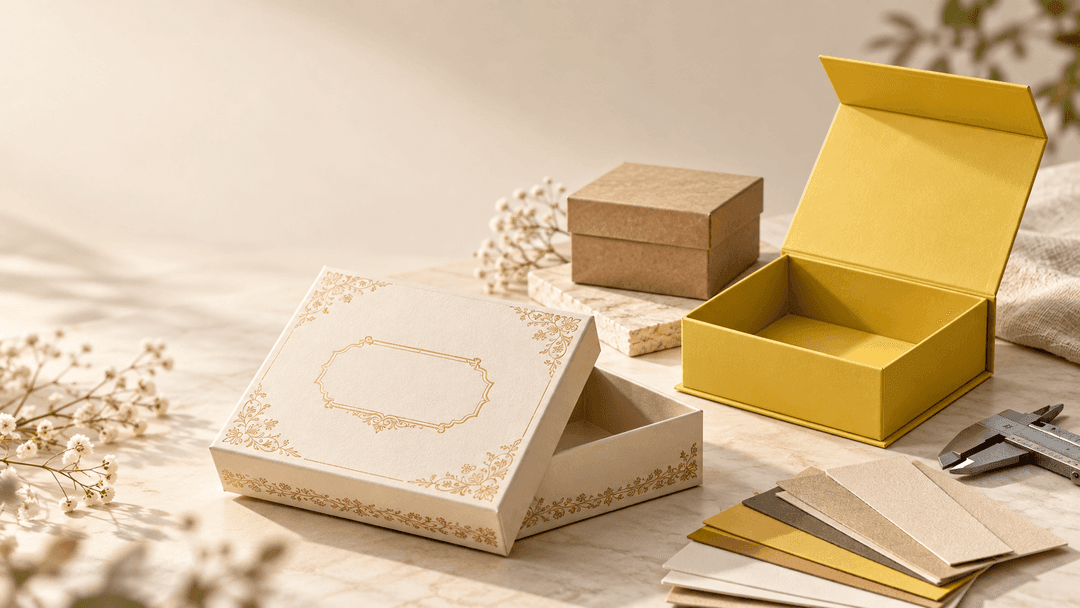
How to Choose a Rigid Gift Box Manufacturer in India
Inkprint Team
Published: October 26, 2026
Choosing a rigid gift box manufacturer in India requires more than comparing prices. The right supplier should offer suitable materials, reliable construction, customisation options and consistent quality to meet your brand's packaging needs.
Key Takeaways
Check manufacturing capabilities: Review the supplier's box styles, customisation options and relevant experience.
Choose suitable materials: Consider board thickness, outer wrapping, inserts and product protection requirements.
Compare quotations fairly: Evaluate minimum order quantities (MOQs), printing, finishing, delivery and additional charges.
Approve a sample: Inspect dimensions, construction, colour accuracy and finishing before bulk production.
Confirm delivery and quality standards: Agree on specifications, production timelines and procedures for handling defective products.
Choose packaging for your product: Select a design that balances presentation, practicality, storage and cost.
What Is a Rigid Gift Box?
A rigid gift box is a sturdy packaging box generally made from thick paperboard covered with decorative paper or another finishing material. Unlike conventional folding cartons, rigid boxes retain their shape and are commonly used for premium products, retail packaging and corporate gifts.
Businesses use custom rigid gift boxes to improve product presentation, organise gift sets and create a more considered unboxing experience.
Common styles include:
Magnetic closure boxes: Feature a flap closure and suit premium gifts and branded product sets.
Drawer boxes: Use a sliding tray and outer sleeve for a distinctive presentation.
Lid-and-base boxes: Offer a classic design for apparel, accessories and gift products.
Collapsible rigid boxes: Can be folded for storage when designed with a suitable folding structure.
Custom-shaped boxes: Include designs such as hexagonal boxes for distinctive product presentation.
The best option depends on your product dimensions, weight, branding requirements and budget.
1. Evaluate the Manufacturer's Capabilities
Before selecting a rigid gift box manufacturer, check whether the supplier can produce the specific structure, finish and quantity your business requires.
A broad packaging catalogue does not necessarily mean that every box style can be customised in the same way. Review relevant product examples and ask questions about the production process.
Consider the following:
Does the supplier offer the rigid box style you need?
Can it accommodate custom dimensions and branding?
Which printing and finishing techniques are available?
Can it provide a sample before bulk production?
How are dimensions, printing and finishing checked?
Which production stages are handled in-house or by external partners?
Understanding these details helps you assess whether the supplier is suitable for your project. It also establishes clear expectations before you commit to an order.
2. Check Material Quality and Box Construction
Materials affect a rigid gift box's strength, weight, appearance and overall cost. The correct choice depends on the product being packed and the conditions in which the box will be handled.
Most rigid gift boxes use a paperboard core covered with a decorative outer wrap. Suppliers may offer printed paper, kraft paper, specialty papers and different finishing options.
When reviewing materials, pay attention to:
Board thickness
Ask the manufacturer to specify the board thickness and explain its suitability for your box dimensions and product weight. A larger box or a heavier product may require a different construction from a small gift box.
Outer wrapping
Compare the available paper types, colours, textures and finishes. The outer wrap should suit your branding and meet your expectations for appearance and durability.
Interior finish and inserts
Consider whether the box needs an inner lining, dividers or a custom insert. These components can help position products neatly and improve presentation.
Edges and corners
Inspect the sample for clean edges, consistent wrapping, secure construction and visible finishing defects.
Do not choose a material solely because it is described as premium. Ask for a sample and evaluate the finished box against your actual requirements.
3. Select the Right Rigid Gift Box Style
The box structure should complement the product and make it easy to access, store and present.
Magnetic closure boxes
Magnetic boxes are commonly used for premium gifting, cosmetics, fragrances and corporate gift sets. Their flap closure creates a structured presentation and offers space for branded artwork.
Drawer-style gift boxes
Drawer boxes feature a sliding tray and an outer sleeve. They can work well for jewellery, accessories, chocolates and small gift sets, provided the dimensions and inserts suit the contents.
Lid-and-base boxes
These boxes have a separate lid and base. Their straightforward structure makes them suitable for many retail and gifting applications, including apparel and accessories.
Collapsible rigid boxes
Collapsible designs can help reduce storage requirements when the box is not in use. Ask about the assembly process, construction and suitability for your product before selecting this style.
Custom-shaped boxes
Shapes such as hexagons can create a distinctive appearance for selected products and gifting occasions. However, the design should remain practical to manufacture, store and use.
Before approving any style, confirm the internal dimensions, product fit and space required for protective wrapping or inserts.
4. Compare Printing and Customisation Options
Customisation helps businesses create packaging that reflects their brand identity. A suitable rigid gift box supplier should explain which printing and finishing options are available for the chosen box.
Depending on the product and production method, options may include:
Full-colour CMYK printing
Screen printing
Matte or gloss lamination
Gold, silver or other available foil finishes
Embossing or debossing, where offered
Custom exterior and interior colours
Branded inserts and printed artwork
For example, a skincare brand may prefer minimal artwork with a refined finish, while a festive gift box may use brighter colours and decorative elements.
Ask for an artwork proof before production. If colour consistency is important, discuss colour matching and request a physical sample where appropriate.
Also confirm the placement of logos, text and other design elements. Correcting these details before production can help avoid costly revisions.
5. Compare MOQ and Bulk Pricing
Minimum order quantity (MOQ) is the smallest quantity a supplier accepts for a particular product or order. It can vary according to box style, dimensions, material, printing and finishing requirements.
Inkprint's rigid gift box collection lists several options with minimum order quantities starting at 250 pieces, while other products have different minimum quantities. Always check the current listing and confirm the MOQ for your specific requirements.
When requesting a quotation, compare:
Price per unit at your required quantity
Printing and finishing charges
Sample or prototype costs
Setup or tooling charges, if applicable
Packing and delivery charges
Applicable taxes
Payment terms and quotation validity
Compare suppliers using the same specifications. A cheaper quotation may include different materials, fewer finishing options or additional charges that are not immediately obvious.
Ordering a larger quantity may reduce the unit cost in some cases, but it can also increase inventory and storage expenses. Select a quantity that makes sense for your expected demand and available budget.
6. Request and Approve a Sample
A sample allows you to assess the actual packaging before committing to bulk production. Product photographs and digital mockups may not fully represent the finished material, colour or construction.
Check the sample for:
Correct internal and external dimensions
Product fit and ease of access
Consistent wrapping and clean corners
Smooth opening and closing
Securely fitted inserts and closures
Correct logo placement and readable printing
Visible glue marks, damage or finishing defects
If the packaging will contain a fragile or heavy item, evaluate the complete packaging configuration. A rigid gift box should not automatically be treated as sufficient protection for shipping.
For e-commerce orders, you may need an additional outer shipping carton and suitable protective materials.
Once the sample meets your requirements, approve the final design and written specifications before authorising bulk production.
7. Confirm Production Timelines and Delivery
Production and delivery commitments matter when packaging is required for a product launch, corporate event or seasonal campaign.
Before placing an order, confirm:
Sample preparation and approval timelines
Production time after final approval
Material availability
Production capacity for your order quantity
Packing and dispatch arrangements
Shipping method and estimated transit time
Procedures for reporting damaged or defective products
Ask the manufacturer to provide a written timeline and clarify when production begins. The schedule may depend on artwork approval, sample acceptance, material availability and payment terms.
For time-sensitive orders, allow room for revisions and transport. Avoid relying on an unconfirmed delivery estimate when planning a launch or campaign.
8. Review Quality Control and Certifications
Consistent quality is important when packaging represents your brand. Ask how the manufacturer checks box dimensions, construction, print quality, finishing and packing before dispatch.
For repeat orders, discuss how approved samples and specifications will be used to maintain consistency between batches.
If your business requires particular certifications, request current supporting documents and verify that they apply to the relevant company, facility, product or process.
You should also clarify how defects will be documented and resolved. Agreeing on quality expectations in writing helps both parties understand what constitutes an acceptable finished product.
9. Consider Sustainable Packaging Options
Sustainability may influence packaging decisions, particularly for brands that want to reduce unnecessary materials or improve packaging recyclability.
When evaluating suppliers, ask about:
Recycled-content paperboard options
Suitable paper wraps and finishes
Opportunities to reduce excess material
The recyclability of coatings, laminations and other components
Material information that supports environmental claims
Paper-based packaging is not automatically recyclable in every location. Coatings, adhesives, magnets and mixed materials may affect how a box can be processed.
Request accurate material information from the manufacturer before describing a product as recyclable or environmentally friendly in your marketing.
10. Choose Packaging That Suits Your Industry
Different products have different packaging requirements. Share details about the intended use so the manufacturer can recommend a suitable structure and finish.
Cosmetics and skincare
Consider structured boxes with suitable inserts to organise bottles, jars and other products. Check that the dimensions accommodate the full product set.
Jewellery and accessories
Prioritise product fit, interior presentation, secure placement and convenient access.
Apparel and fashion
Lid-and-base boxes or other suitable rigid designs can present folded garments and accessories neatly. Check the internal dimensions to avoid unnecessary empty space.
Chocolates and confectionery
Discuss food-contact requirements, inner packaging and suitable inserts. A decorative rigid gift box should not be assumed to provide a food-safe contact surface.
Corporate gifting
Consider consistent branding, practical product arrangement and a design that accommodates the entire gift set.
E-commerce brands
Evaluate the total packaging cost, storage requirements and protection during transit. Premium presentation packaging may need a separate protective outer carton.
11. Prepare a Clear Brief Before Requesting a Quote
A detailed packaging brief helps manufacturers understand your requirements and prepare more comparable quotations.
Include the following details in your enquiry:
Product details: Explain what the box will contain.
Dimensions: Provide the required internal measurements and clarify whether dimensions are internal or external.
Box style: Specify magnetic closure, drawer, lid-and-base, collapsible or another preferred structure.
Materials: Share your preferences or ask the supplier to recommend suitable options.
Artwork: Provide the logo, artwork files, brand colours and printing requirements.
Finishing: Specify any desired lamination, foil or embossing.
Quantity: State the required order quantity and likely repeat-order needs.
Inserts: Explain whether the product needs dividers, cushioning or a custom insert.
Delivery: Provide the destination and required delivery date.
Budget: Share a target budget if available.
A clear brief reduces misunderstandings and makes it easier to evaluate different suppliers on a like-for-like basis.
Why Consider Inkprint for Rigid Gift Boxes?
Inkprint offers a range of rigid gift box options for businesses exploring customised packaging. Its collection includes slider boxes, magnetic gift boxes, kraft designs, collapsible boxes and other styles.
Depending on the selected product, listed options include full-colour CMYK printing, screen printing, matte or gloss lamination and foil finishes. Minimum order quantities, materials and available customisation vary across products.
Businesses can explore the Inkprint rigid gift boxes collection to compare available styles and identify packaging options for their requirements.
Before placing an order, confirm the current price, MOQ, specifications, sample availability and delivery timeline for the chosen design.
Final Thoughts
Choosing the right rigid gift box manufacturer in India comes down to finding a supplier that can meet your packaging, quality, customisation and delivery requirements.
Compare quotations carefully, inspect a sample and agree on the final specifications before placing a bulk order. This approach helps you select packaging that represents your brand well while remaining practical for your business.
If you are exploring customised packaging, browse Inkprint's rigid gift boxes collection to review the available styles and discuss your requirements.
Get in Touch
Still have questions? Fill out the form below and our team will get back to you shortly.